

Product strategy is one of my favorite parts of product management. As a product lead at Mindbody, Noom, Quizlet, Lyft, and Opower, I’ve started and led teams in several new product areas. When I start on a new area, I have two priorities: bond with the team, and map out the space. I aim to share a strategy with my team and execs within a few weeks. It informs the roadmap, forces me to ramp up, and is the clearest way to demonstrate product leadership.
Repeated practice and feedback have made me better and quicker at defining strategy. Here’s my approach, distilled into steps.
What is strategy?
Strategy is your best bet on how to achieve a goal, whether that means solving a problem or seizing an opportunity.
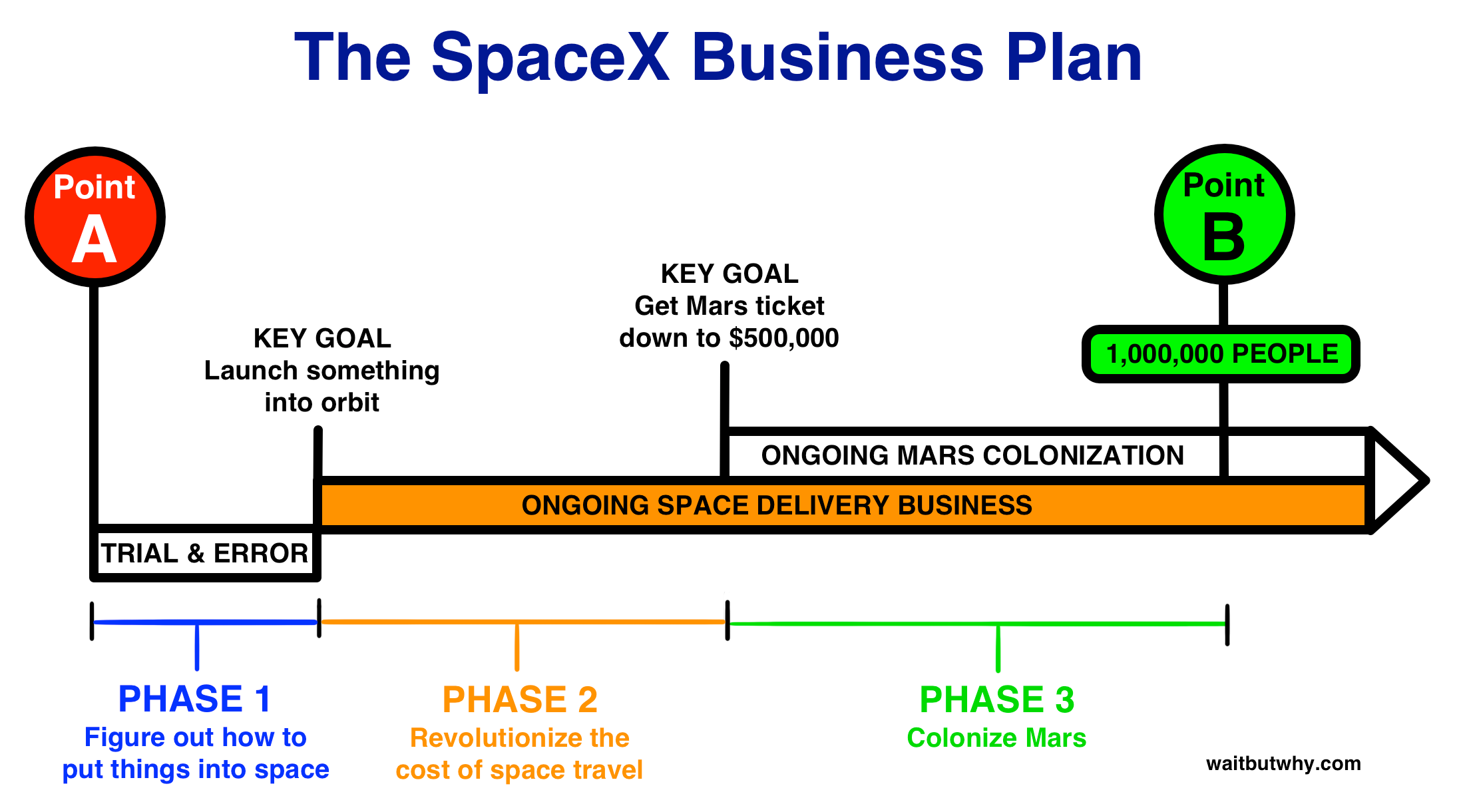
Good strategy is simple and clear, ambitious but achievable, long-term and durable. It leverages core strengths and mitigates risks. Above all, good strategy explicitly says what not to do. If your strategy doesn’t make anyone uncomfortable, it probably isn’t choosing anything.
Strategy has four components:
Specific goals
Assessment of the current situation and challenges
High-level approach
Coherent actions
A more fun way to frame it: What game are we playing? How are we keeping score? How do we win?
Strategy is only as useful as it is followed. Good strategy is simple to explain, understand, and act on. That means a one-slide version, an expanded deck or doc, an appendix that shows the work, and a team that understands it and is excited about it.
Steps to come up with strategy
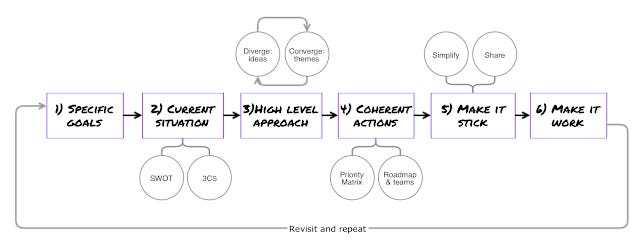
0) Strategy brain trust
My first step is to identify a few core cross-functional teammates to bounce ideas off and give feedback on drafts at every step. A strategy built with the right team is better than one built in isolation, and it generates more buy-in and ownership.
But while you take ideas and feedback from everyone, you still have to consolidate, edit, and decide on your own. A camel is a horse designed by a committee.
1) Set specific goals

This is the foundational step. Goals should be specific, ambitious, and inspiring. Don’t mistake a broad mission or vision statement for a goal. Good goals usually sit at the intersection of the company’s mission, its core strengths, and the opportunity.
For example, Quizlet’s mission is to help anyone practice and master anything. We distilled it into a specific goal: help high school and college students ace their tests. We explicitly said we weren’t trying to replace the textbook or the teacher. That space was competitive and would have required a B2B model.
Expect step 2 to change your goal. That’s fine. Go back and sharpen it.
2) Assess the current situation and challenges
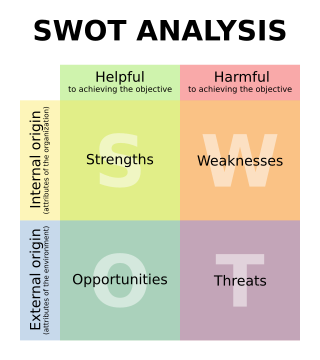
This is the research step. A SWOT exercise is a good place to start. I also like the 3Cs:
Company: How is the company doing? What’s working and what isn’t? What are its unique strengths and resources?
Customers: Who are the current and potential customers? What’s their flow and lifecycle? What jobs are they hiring us for? How are their behaviors and preferences changing?
Competition: Who are the main players? How are they positioned and performing? What gaps, technologies, and trends are emerging?
At Opower, which helps utilities reduce energy use, growth in our core product was slowing. We had saturated the US market, and international markets had different needs. New entrants were cutting prices and eroding margins. Our strengths were behavioral messaging at scale and deep relationships and integrations with utilities. We could extend behavioral messaging to other verticals like healthcare, or use our relationships to move into adjacent utility products like billing and websites, a crowded space.
A good assessment doesn’t list twenty problems. It names the one or two that matter most.
3) High-level approach
This is the creative part. I follow a double-diamond approach: diverge with a broad exploration of ideas, converge into themes, pressure-test, and repeat a few times.
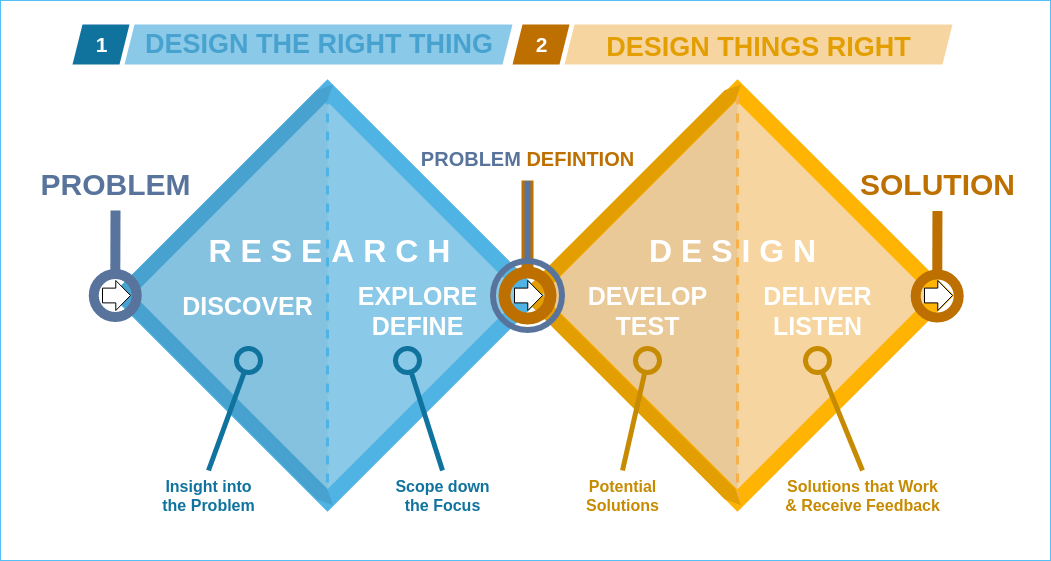
Explore ideas: Talk 1:1 with team members, experts, and customers. Study competitors and analogs in other industries, countries, and the physical world.
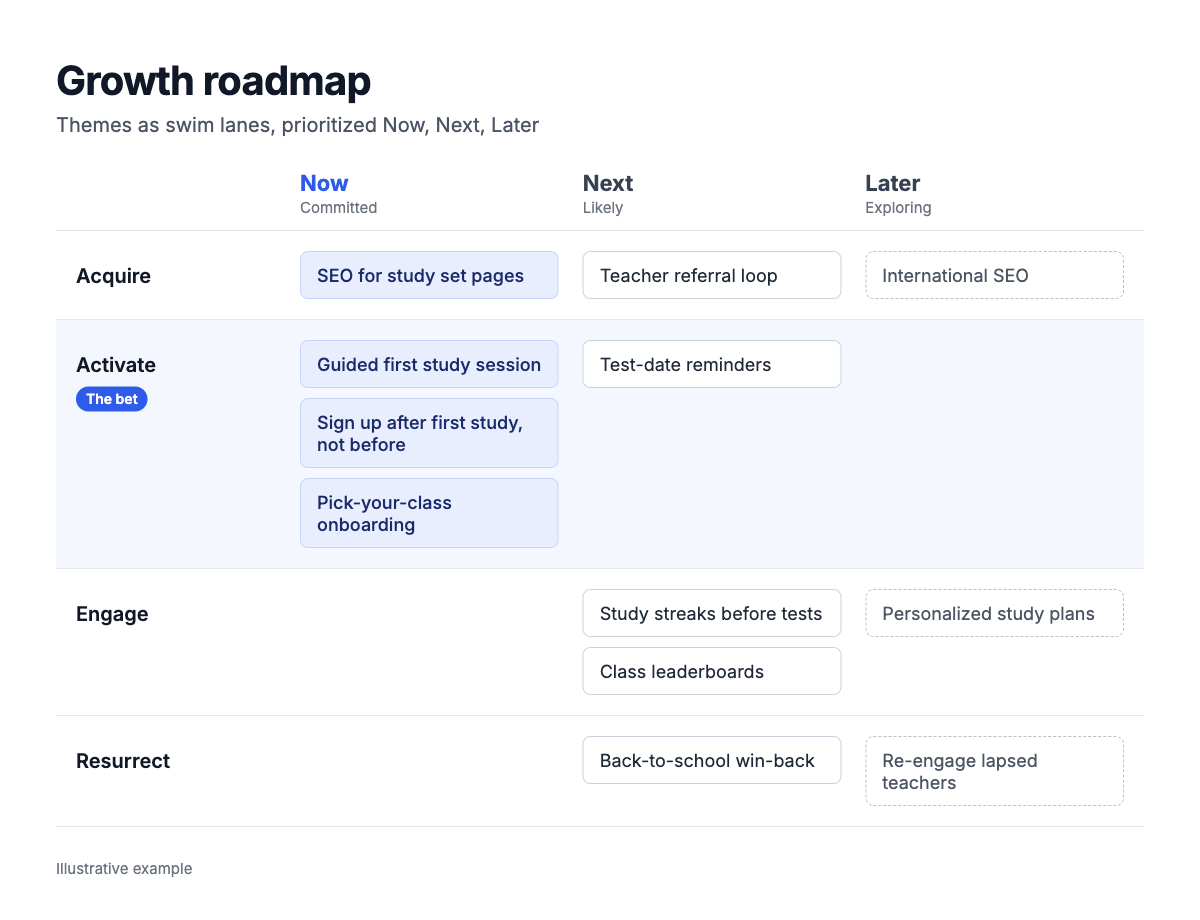
Organize into themes: Make them MECE, mutually exclusive and collectively exhaustive. For my growth team at Quizlet, the themes were Acquire new traffic, Activate visitors, Engage users, and Resurrect churned users.
Then choose. MECE themes map the space. They don’t pick a path. Our four growth themes covered everything a growth team could do, which is exactly why they weren’t a strategy on their own. The strategy was deciding where to put most of our weight: [e.g., we bet on X over Y because Z]. This is the hardest and most important part. Don’t skip it.
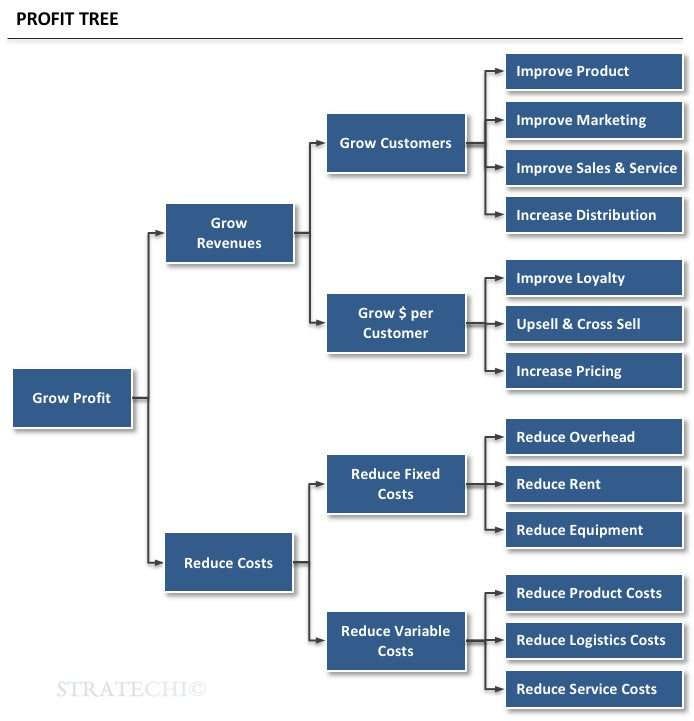
Review and revise: This takes multiple iterations. I’ve learned to be okay with throwing away work and starting from a clean slate when things don’t click.
4) Coherent action
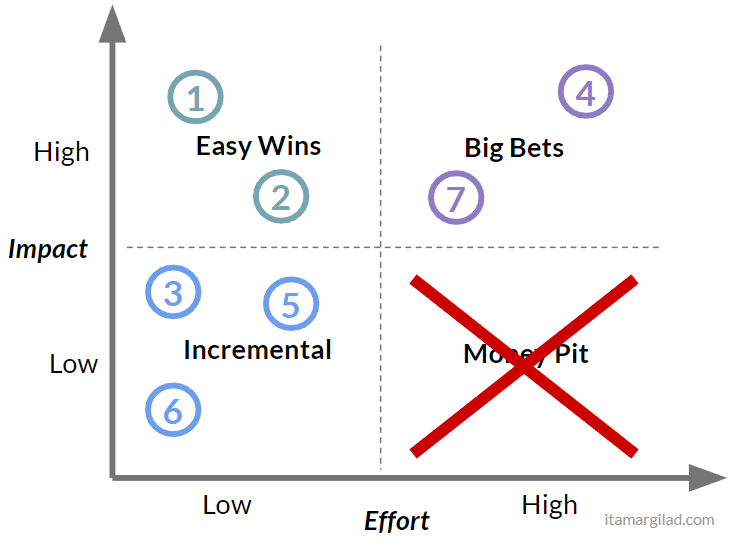
Once the themes and the bet are clear, I brainstorm ideas for each theme with the team. I make ideas tangible with visuals and mocks, to validate them and communicate them. I prioritize themes and ideas with an Impact × Effort matrix, and recommend a portfolio of easy wins (to build momentum) and big bets.
Coherent means the actions reinforce each other. Ten good projects pulling in different directions is a to-do list, not a strategy.
Then ideas go into swim lanes (of teams and themes), a prioritized Now/Next/Later roadmap, and a Gantt chart with owners, timelines, and dependencies.
5) Make it stick
This is the marketing phase. It’s as important for your strategy to be known and remembered as it is to be right.
Simplify, simplify, simplify. Create a single visual slide, with an expanded deck or doc to back it up. This takes several revisions. I’ve made the mistake of using complex or multiple frameworks for one product area. Don’t do it. People won’t get it, and they won’t remember it.
Share, share, share with every stakeholder: your team, partner teams, functional teams, execs. Share it again and again. Repetition doesn’t spoil a prayer or a strategy.
6) Make it work
Any good strategy takes time to work, so stick with it and execute. No plan survives first contact with the enemy, so keep your eyes open, tweak, and revisit.
References
Books
Articles